



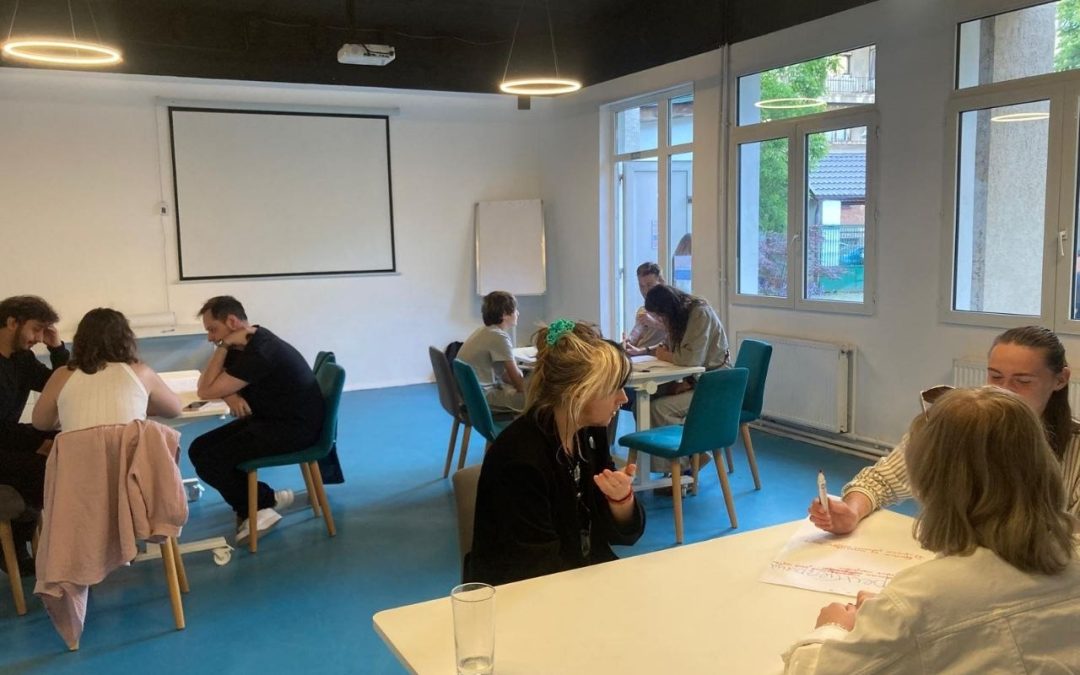
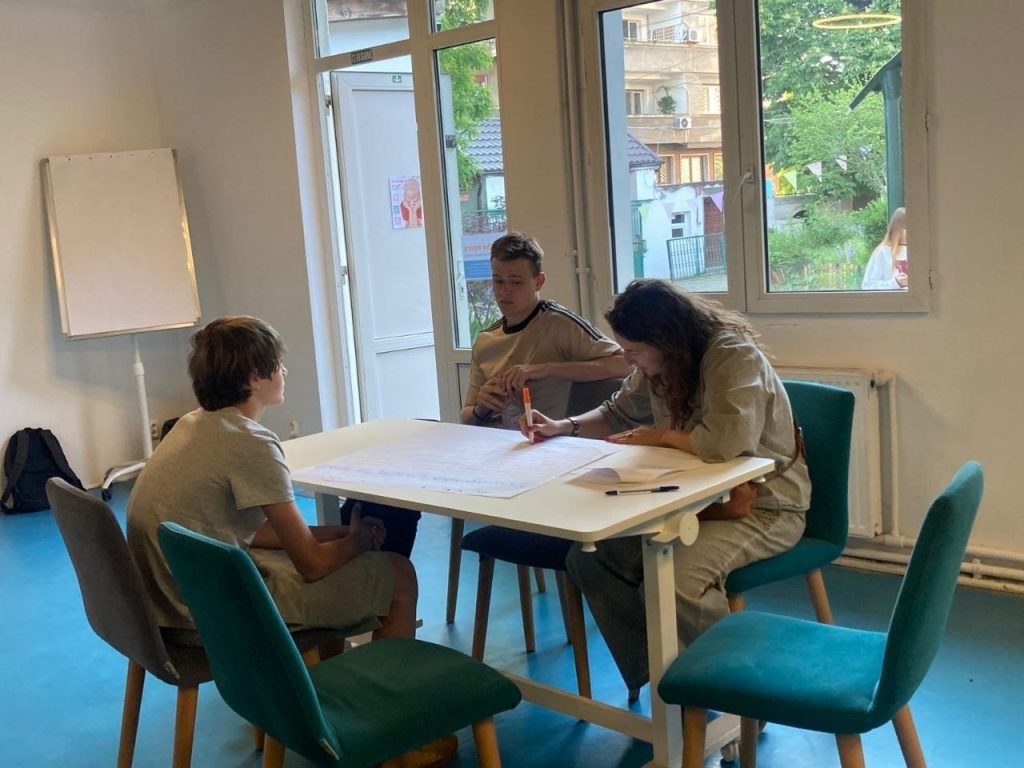
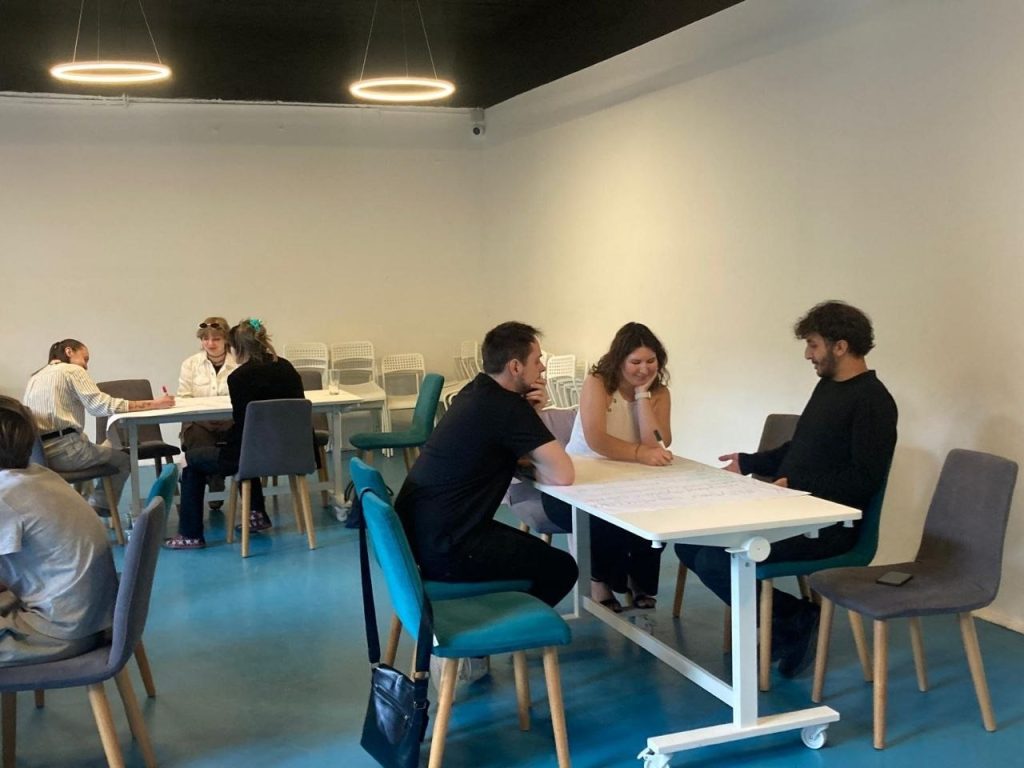
As part of the “Pathways to Belonging” project, we continued our series of Public Café consultations with young Ukrainians in Bucharest. The fourth session created another open space where young people could share their experiences, challenges, ideas, and hopes for the future.
Using the Public Café format, participants explored six different topics connected to their lives in Romania: social integration and language barriers, mental health and well-being, education and professional development, cultural identity and intercultural exchange, civic participation and rights, and future and reintegration.
The conversations showed once again that the experience of building a life in a new country is complex. While language, friendships, education, work, and community can open new opportunities, uncertainty about the future, financial difficulties, bureaucracy, and the ongoing situation in Ukraine continue to influence everyday life.
Social Integration and Language Barriers
Language continues to play an important role in how young Ukrainians experience life in Romania. Participants mentioned language, communication, public transportation, documents, and the uncertainty of deciding whether to stay as some of the difficult aspects of their first weeks after moving.
Feeling comfortable communicating with local people often depends on understanding what the conversation is about and feeling that the other person is genuinely interested. At the same time, participants said that communication with locals has increased as their Romanian language skills have improved.
Young people identified many places where it is possible to meet new people and build connections, including gyms, universities, workplaces, concerts, social media, and youth spaces such as FNT. Romanian language learning, friendships, and professional or personal support have also helped with adaptation.
However, work, language, money, and cultural differences remain challenges in everyday life. Participants highlighted conversation clubs, workshops, and activities specifically designed to help people connect with others as useful ways to support integration.
Mental Health and Well-being
Mental well-being was closely connected to uncertainty. Participants spoke about instability, worries about the future, moving to another country, changes they were not prepared for, relationships, and the situation in the world.
For some, finding a sense of inner peace is still difficult. Friends, family, FNT, hobbies, music, films and TV series, animals, studying, and sports were among the things that can help young people recover after a difficult day.
Participants also mentioned everyday habits that support their well-being, including walking, breathing exercises, sports, and maintaining a sleep routine. At the same time, some shared that their attitude toward their mental health had worsened since moving abroad.
When discussing what could make support more accessible, participants emphasized the importance of spreading information, normalizing conversations around mental health, and providing more funding for projects. They also identified practical needs such as help with finding a job, social support, and assistance related to temporary residence permits.
Education and Professional Development
Education and professional development remain important parts of building a future abroad. Participants had already taken advantage of opportunities including university admission, courses, and volunteering.
Financial independence, career growth, stability, personal interests, helping others, social status, and the possibility of obtaining a work visa were among the motivations for continuing to develop professionally.
Language skills were identified as especially important. Participants described language proficiency as one of the most important factors when Ukrainians look for employment in Romania. Professional, specialized, and documented or certified skills were also seen as valuable in today's job market.
At the same time, finding information about educational programmes and training opportunities can be difficult. Participants mentioned a lack of available information and language barriers as important obstacles.
The discussion also revealed curiosity about new professional fields, including cinematography, forensic science, sound engineering, translation, and event hosting. Learning with native speakers, specialized training, and a combination of online and in-person learning were among the preferred formats.
Cultural Identity and Intercultural Exchange
Living abroad can change the way people express their cultural identity. Participants described adapting their behaviour to fit into a new culture, while continuing to maintain important connections with Ukraine.
Food and music remain important ways of keeping Ukrainian culture alive. Participants mentioned preparing Ukrainian dishes and performing well-known Ukrainian songs, including koliadky. They also highlighted Ivana Kupala as a Ukrainian tradition they would like to introduce to people from other countries.
Family, friends, and following current news help young Ukrainians stay connected to Ukraine. At the same time, participants expressed interest in Romanian society, particularly its reforms and aspirations to become more Europeanized.
The conversation also touched on cultural misunderstandings, including differences connected to religion and the difficulty of communicating the experiences and struggles of Ukrainian refugees to people who have not lived through them.
Participants saw cultural events as an opportunity for mutual exchange: sharing experiences, perspectives, stories, food, and traditions. Storytelling events focused on different cultures were particularly appealing, while Ukrainian cuisine, including borscht and dumplings, remains one of the most common ways participants introduce their culture to others.
Civic Participation and Rights
Access to clear information about rights and opportunities remains a challenge. Participants described it as difficult to find all the necessary information and highlighted the need for a more organized source covering topics such as university admission and temporary protection for Ukrainians.
For some participants, feeling part of the local community is still a work in progress. At the same time, volunteering has provided meaningful opportunities to connect with others. One particularly memorable experience involved volunteering with children, appreciated for its organized structure and its opportunity to work with both Romanian and Ukrainian children.
Youth opportunities are often discovered through Youth FNT. Participants also highlighted the importance of face-to-face communication, alongside email and WhatsApp, when interacting with organizations and public institutions.
Several issues affecting young people were seen as receiving too little attention, including social isolation, sexual education, PTSD, sexism, and bullying.
Participants suggested that civic participation could become more engaging if young people could see concrete results from the concerns they raise, have better access to information, and have more opportunities to participate in meaningful activities and events.
Future and Reintegration
Looking toward the future, participants identified education, relationships, integration, and achieving personal goals as important priorities.
Despite uncertainty, new opportunities have appeared since moving abroad. Participants mentioned access to European education, new connections, and more employment opportunities. A greater number of work opportunities and the possibility of learning a foreign language can also make planning for the future feel more possible.
For some, optimism and small reassurances coming from personal achievements provide a sense of stability. Yet practical and emotional support remains important, particularly mental and emotional support and help with bureaucratic procedures and documents.
When imagining life after the war, participants had different perspectives. Some would like to return to Ukraine, while others would prefer to stay in Romania. For many, the decision will depend on a combination of social, medical, political, and career-related factors.
The experience of living abroad has also highlighted skills and values that participants would like to carry into the future, including financial literacy, freedom from discrimination, and better access to language-learning support.
The fourth Public Café adds another layer to our understanding of the experiences and needs of young Ukrainians living in Bucharest.
The conversations show that integration is not simply about adapting to a new country. It is also about having access to information, building relationships, finding educational and professional opportunities, maintaining cultural identity, taking part in the community, and feeling able to plan for the future.
Most importantly, the Public Café continues to provide a space where young Ukrainians can speak about these experiences in their own words. Their perspectives help us understand where support is most needed and can guide the activities, resources, and opportunities developed through “Pathways to Belonging”.
We are grateful to everyone who took part in the fourth consultation for their openness and honesty. We look forward to continuing these conversations and creating more spaces where young people's voices can be heard, shared, and transformed into meaningful action.
The project “Pathways to Belonging” (EU-UKR-PB) is co-funded by the European Union through the European Solidarity Corps programme.