
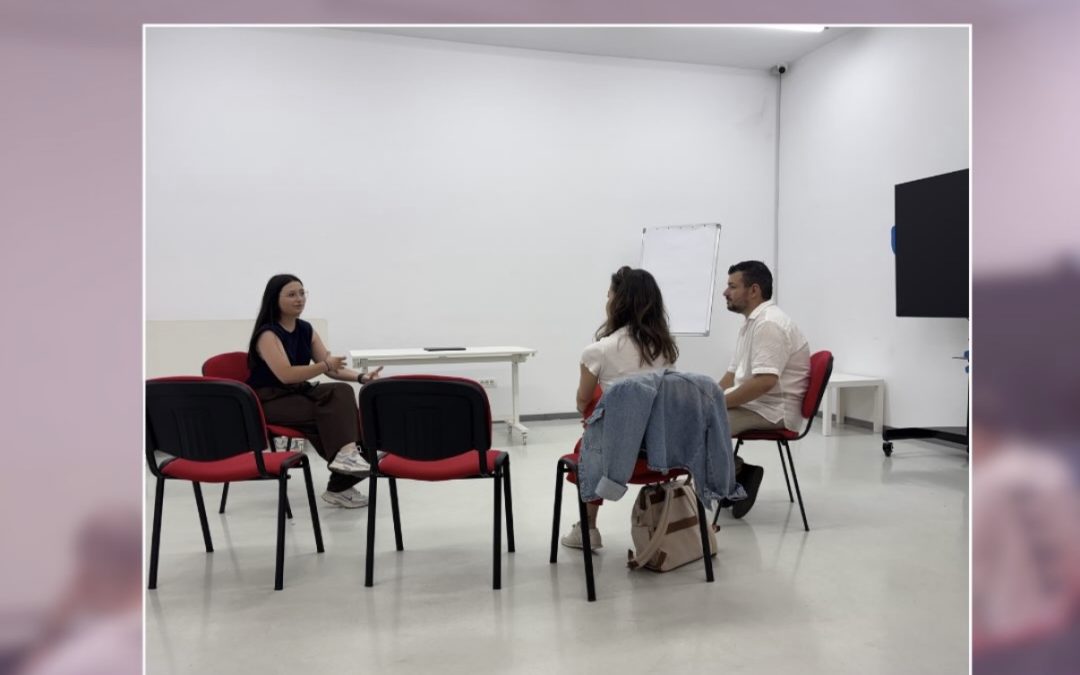
THE YOUTH by FNT in Bucharest hosted "Bridges & Belonging", a workshop on good practices for working with young Ukrainian refugees. Our guests were the Romanian Red Cross and Opportune, two organisations that support young refugees every day.
The workshop was part of "Pathways to Belonging", a European Solidarity Corps project in which the National Youth Foundation (FNT) runs a safe space for young Ukrainians, together with international volunteer teams. We had two things to share: how we work with young refugees at our centre, and what young Ukrainians themselves told us in a series of consultations this year.
How we work with young refugees
Our approach builds on the youth-friendly spaces FNT has run for young people from Ukraine since 2022. We shared the practices that have worked best for us:
- A safe space first. THE YOUTH by FNT is an open, welcoming place where young people can simply come, meet others and feel at home, without pressure or paperwork.
- Language as a bridge. Regular language practice sessions help young people gain confidence in everyday situations, from school to the doctor's office.
- Culture in both directions. Cultural exchange activities let young Ukrainians share their traditions, food and music, not only learn about Romania's.
- Volunteers who are trained and supported. International European Solidarity Corps volunteer teams run daily activities, with training on non-formal education and on well-being, including their own.
- Young people as co-creators. Some young Ukrainians who started as participants at our centre have become volunteers and run activities themselves.
- Listening before planning. We regularly ask young people what they need, and adjust our activities to what they tell us.
What young Ukrainians told us
Since April 2026, we have held five consultations with young Ukrainians in Bucharest using the Public Café method: an informal, café-style setting where participants move between six themed tables and speak freely, with no "correct" answers expected. At the June session alone, 21 young people took part. We presented the main results to our guests:
- Social integration and language. Language is the biggest everyday barrier, from pharmacies and banks to job interviews. Community spaces like our centre are where many found their first friends.
- Mental health and well-being. Uncertainty about the future and the war at home weigh heavily. Young people cope through friends, music, sport and creative outlets, but professional help is often costly or not available in Ukrainian.
- Education and work. Non-recognised diplomas, language gaps and discrimination in hiring hold people back. Language courses, internships, scholarships and volunteering are highly valued.
- Cultural identity. Ukrainian food, music and traditions keep identity alive, and many now describe a mixed, bicultural sense of who they are. They want to share their culture with Romanians.
- Civic participation and rights. Many find it hard to get clear information about their rights, temporary protection or university admission, and feel left out of decisions that affect them.
- The future. Plans differ: some hope to return to Ukraine, others want to build their lives in Romania. Family, housing and financial stability are what help most.
Their recommendations were concrete: more joint activities with young Romanians, small-group Romanian courses, accessible mental health support, clear and organised information, and more face-to-face contact with organisations. Above all, they asked local communities to invite them in, without assumptions.
Learning from one another
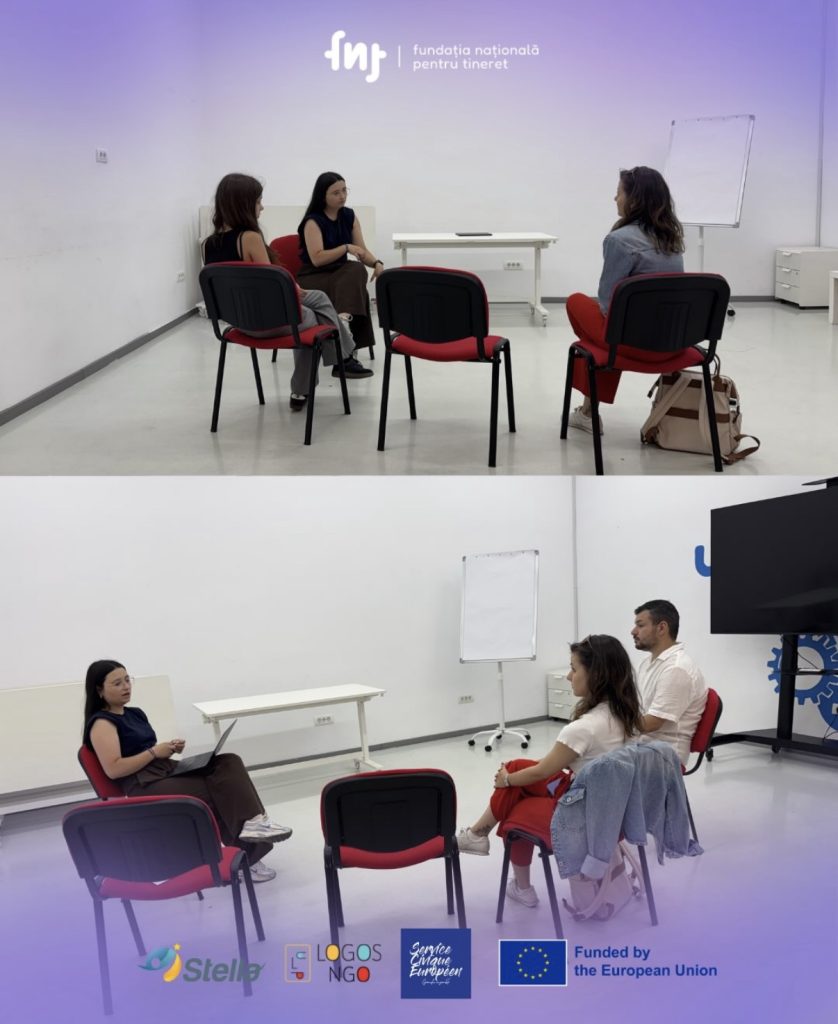
The second part of the workshop was an open, circle-style conversation. The Romanian Red Cross and Opportune shared their own experiences, the obstacles they meet and the solutions they have found. We talked about building trust, working across language barriers, encouraging young people to take part, and creating a real sense of community.
Many of the challenges were the same across all three organisations, and so were many of the answers. Hearing how others approach them gave each of us practical ideas to take back to our own work.
Meaningful inclusion does not happen by chance. It is built through listening, learning and working together. We thank the Romanian Red Cross and Opportune for their openness, and we look forward to building more bridges together.
"Pathways to Belonging" (EU-UKR-PB, project 101239630) is co-funded by the European Union through the European Solidarity Corps. It is coordinated by the National Youth Foundation (FNT) in partnership with CSCE (France), LOGOS (Poland) and STELLA (Ukraine). Co-funded by the European Union. Views and opinions expressed are however those of the author(s) only and do not necessarily reflect those of the European Union or the European Education and Culture Executive Agency (EACEA). Neither the European Union nor the granting authority can be held responsible for them.