
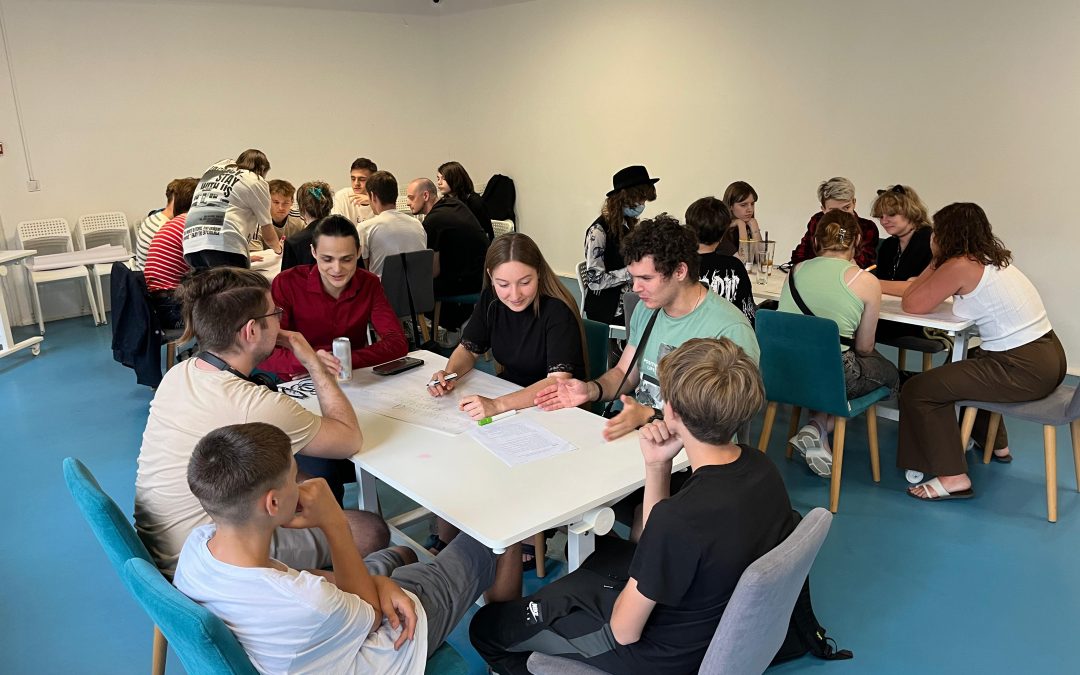
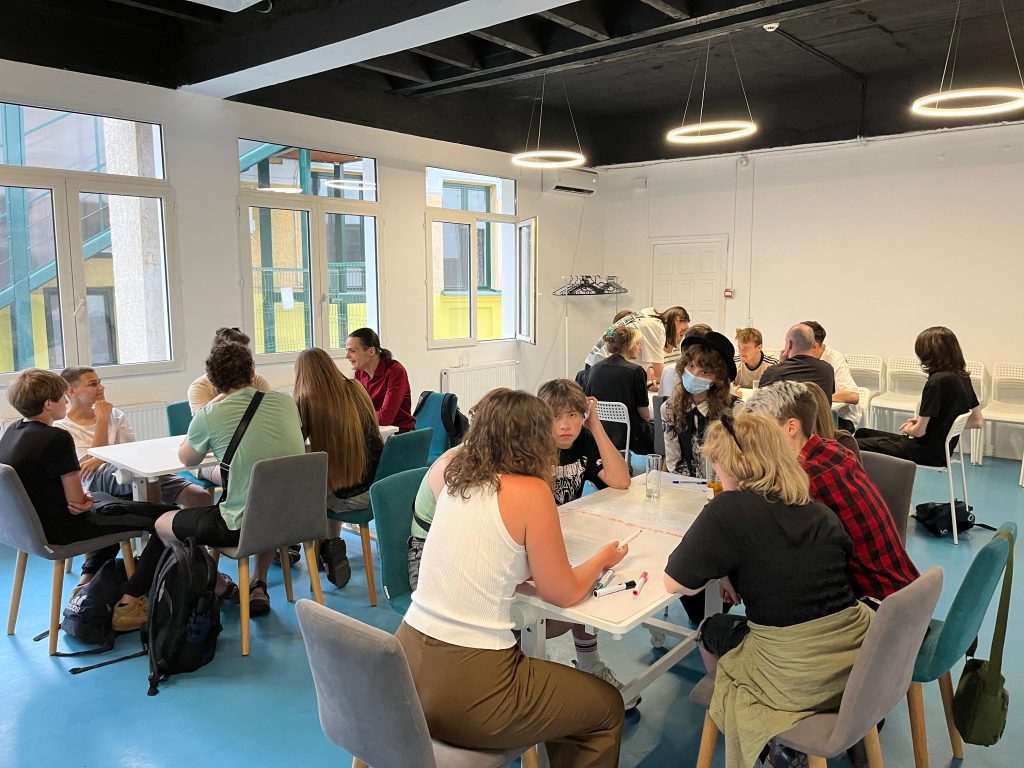
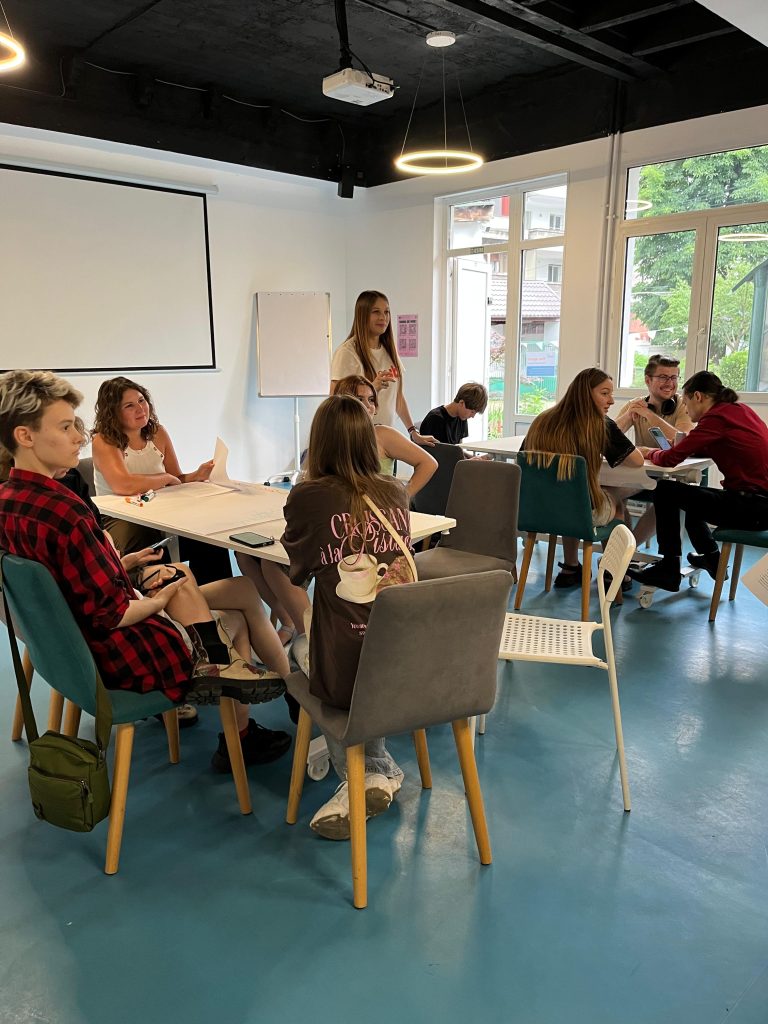
On 23 June, twenty-one young Ukrainians gathered at The Youth in Bucharest for the third consultation in a series we have been running to better understand their experiences of living, studying, and building a future in Romania. This time, we used the Public Café method: participants moved between six tables, each dedicated to a different theme, spending time in small groups before rotating to the next conversation. The result was a lively, honest exchange that touched on nearly every part of daily life.
The format itself mattered as much as the questions. Sitting around a table with coffee and open notebooks, rather than facing a formal panel, made it easier for participants to speak freely, disagree with one another, and build on what previous groups at the same table had written down. By the end of the afternoon, each table held a layered record of ideas, worries, memories, and hopes contributed by the whole group.
Six Conversations, One Afternoon
Social Integration and Language Barriers
Participants described very different timelines for feeling at home in Romania, from settling in almost immediately to needing several years. Many pointed to the language barrier as the biggest daily obstacle, especially at school, at work, or when accessing healthcare, but just as often it was fear of making mistakes or of being judged that held them back from speaking. Several shared moments when strangers stepped in to help, from giving directions to explaining how public transport works, and named FNT's youth centre as one of the easiest places to make new friends.
Mental Health and Well-being
University, exams, and everyday bureaucracy came up repeatedly as sources of pressure, alongside the ongoing worry of following the news from Ukraine and staying in touch with family back home. To cope, participants turned to music, sport, creative hobbies, conversations with friends and family, and, for some, support from a psychologist or counsellor. Many said they find it easier to ask for help from people they already trust than from strangers, and several named safe, familiar spaces such as FNT's centre as essential for their sense of inner peace.
Education and Professional Development
The language barrier and the cost and complexity of recognising Ukrainian academic documents were the most frequently mentioned obstacles to further study or employment. At the same time, participants spoke warmly about free educational programmes for Ukrainians, scholarships, and the sense of community found at youth centres and through Erasmus opportunities. Looking ahead, many are curious about fields they had not previously considered, from IT and robotics to pastry-making and photography, and most agreed that a good local diploma, more practical experience, and stronger language skills would make them feel more confident on the job market.
Cultural Identity and Intercultural Exchange
Food, family, and hometowns topped the list of what participants miss most about Ukraine, alongside specific dishes such as borscht, varenyky, and Ukrainian sweets. Many spoke with pride about Ukrainian culture, digitalisation, and the country's fight for freedom, while also naming things they have come to appreciate in Romania, from the relaxed pace of life to the kindness of the people they have met. Asked what they would include in a Ukrainian cultural evening for locals, the group's answers, from pysanky workshops to karaoke and traditional cuisine, painted a picture of a culture they are eager to share rather than simply preserve quietly.
Civic Participation and Rights
Several participants admitted they had, at times, not known where to turn for help, whether about free education opportunities, family doctors, or housing. Most feel they can influence things within their own circle of friends, and some are already active as volunteers, translating, supporting community outreach, or working with organisations such as the Red Cross and IOM. Greater awareness of existing opportunities, clearer information about projects, and more accessible platforms came up again and again as what would make it easier for more young people to get involved.
Future and Reintegration
When asked what worries them most about the future, participants mentioned the situation in both Ukraine and Romania, financial security, and employment prospects. Family, stable housing, and a sense of social integration were named as the strongest sources of stability today. Many said that living abroad had already taught them independence and adaptability, and their advice to other young Ukrainians going through the same experience was simple and direct: stay strong, don't be afraid to socialise, and don't stop fighting for your future.
Why This Matters
This third consultation adds another layer to what we have learned directly from young Ukrainians in Bucharest over the past months. Rather than assuming what support looks like, we are asking the people it is meant for, and letting their answers shape the activities, resources, and conversations we build next. We are grateful to everyone who joined us around the table on 23 June for their openness and honesty, and we look forward to continuing this dialogue in the months ahead.
“Pathways to Belonging” (EU-UKR-PB), project number 101239630, is funded by the European Union through the European Solidarity Corps, under the Key Action “Volunteering Teams in High Priority Areas” (ESC-SOLID-2025-VTHPA). The 24-month project is coordinated by the National Foundation for Youth (Romania), in partnership with Collectif pour un Service Civique Européen (France) and Stowarzyszenie Projektów Międzynarodowych LOGOS Polska (Poland). It aims to support the social inclusion, civic participation and personal and professional development of young Ukrainian refugees, drawing on a safe-spaces methodology delivered through the network of youth centres coordinated by the National Foundation for Youth.