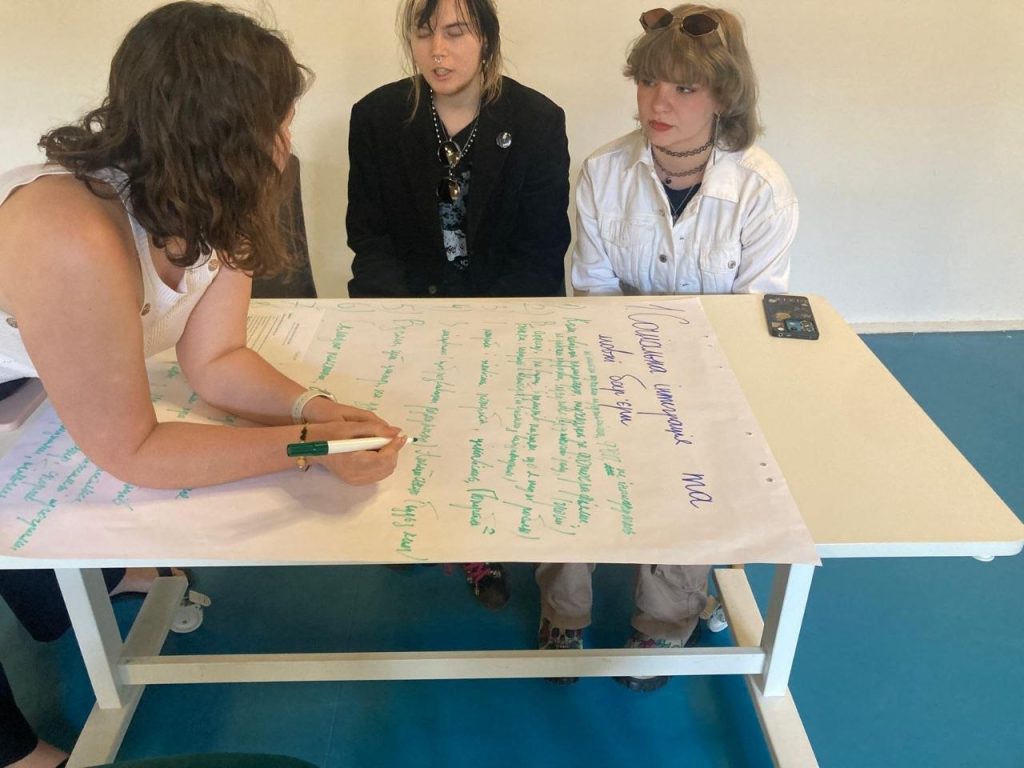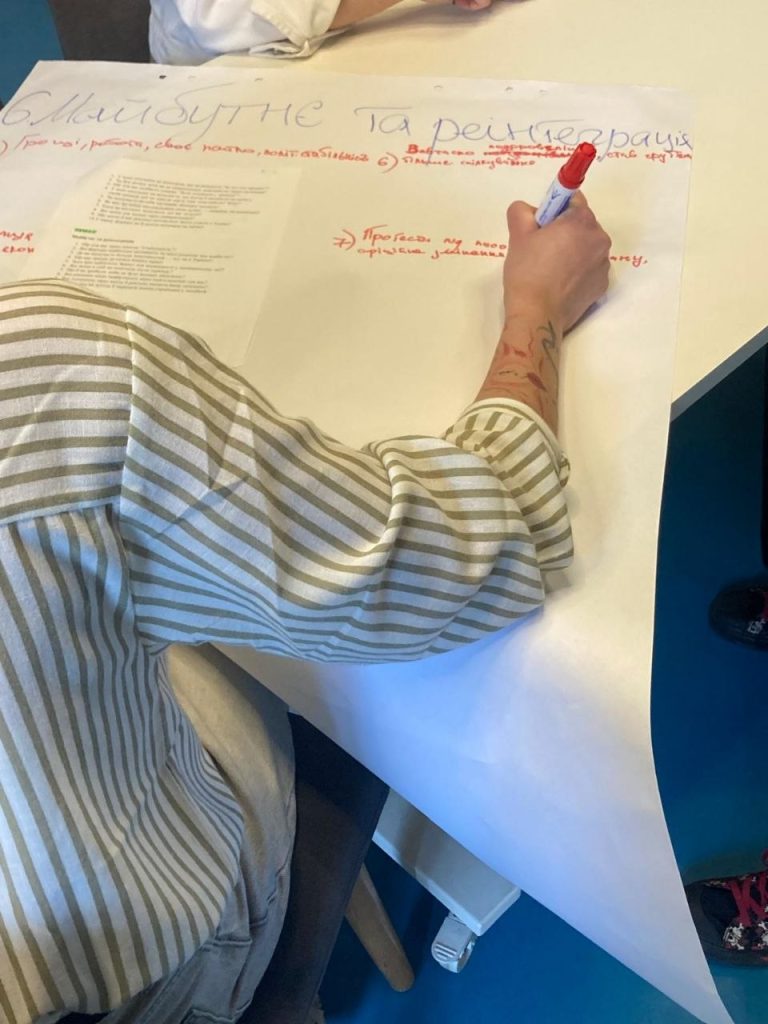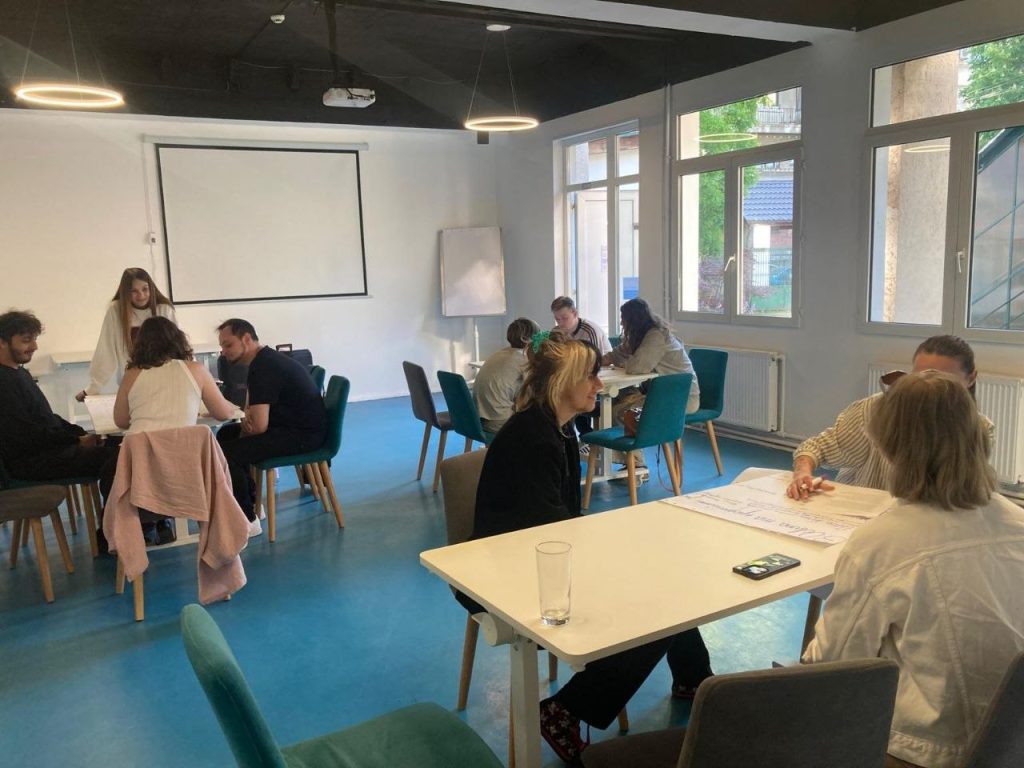
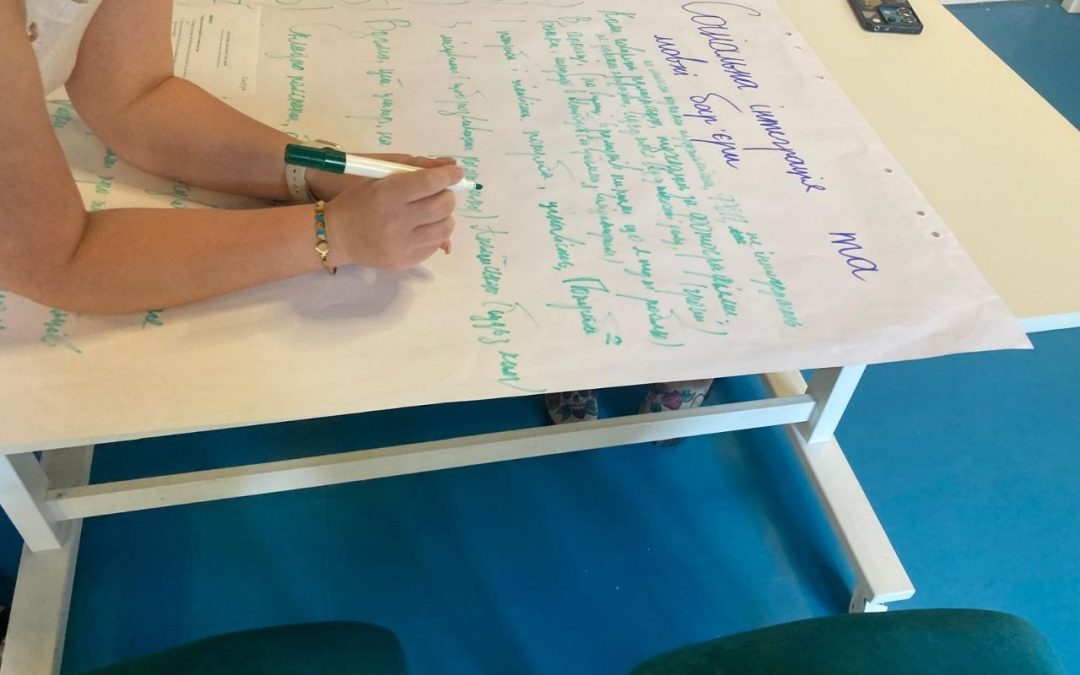
On 15 May, the “Pathways to Belonging” project (EU-UKR-PB) held a new consultation with young Ukrainian refugees. As with the first session in April, the format was deliberately informal, a Public Café, a relaxed, café-style setting in which young people are invited to speak openly, without the pressure of giving the “right” answers. The aim was not to collect tidy data, but to hear, in their own words, what daily life in Romania actually feels like.
This time the conversation was unusually candid, and it is worth letting that honesty come through. Across six themes, participants described the obstacles they meet, the things that keep them going, and the kind of support that would make a real difference. What follows is a faithful summary of what they shared.
Why their involvement matters
“Pathways to Belonging” rests on a simple conviction, the people best placed to say what young Ukrainians need are the young people themselves. Consultations turn that principle into practice, moving participants from being recipients of support to being co-authors of the activities meant for them. The 15 May session showed why this matters, the picture that emerged was far more textured, and far more useful, than any assumption made on their behalf could have been.
The themes discussed
Social inclusion and language barriers. Participants described the many everyday moments that leave them feeling out of place, being addressed in Romanian they cannot yet follow, struggling at the pharmacy or the bank, or being fined over a bus-ticket validator they could not explain. Several pointed to structural obstacles too: difficulty being hired, being able to open a business only on unfavourable terms, or being refused loans and the chance to buy a home. Yet they also named the places where they do feel at home, the FNT youth centre, their language classes, circles of friends and creative groups. Views on whether to lean into the Ukrainian community or the local one were mixed, but a common thread emerged: shared activities with Romanians, board games and sport are where they would speak most freely. What they want is less negative stereotyping and more visible, well-attended opportunities to take part.
Mental health and well-being. This was the most personal part of the conversation. Young people spoke of rapid burnout and a draining, anxious uncertainty fed by the unclear status of Ukrainians in Romania, a difficult labour market, and the distance from loved ones back home they can no longer turn to. What helps them hold on, they said, is a mix of people and outlets, family and friends, a psychologist, hobbies, music, sport, and the FNT centre itself. But access to professional help is blocked by real barriers: cost, the absence of an in-person Ukrainian-speaking psychologist, services capped at only a handful of sessions, and an underlying lack of trust. Asked about rest, many admitted that genuine rest is almost out of reach; their personal “reset” lies in small, restorative things, a morning run, time by the sea or in nature, a game of volleyball, a walk alone.
Education and professional development. Participants reflected on how much of their earlier experience, qualifications, business know-how, legal knowledge, no longer translates here, and how the non-recognition of diplomas, language gaps and scarce vacancies undermine their confidence in the job market. They have not been passive: they are learning Romanian, volunteering, taking courses, searching for information and applying to Romanian universities, even as limited places and the concentration of everything in the city centre hold them back. Their idea of good learning is concrete, well-organised, more advanced Romanian courses in smaller groups, real internships, distance-learning options, and teaching by people genuinely invested in them. Many would take on unskilled or service work now to keep moving forward, while stressing that official recognition of their skills matters for their future.
Cultural identity and intercultural exchange. Young people feel most Ukrainian among their own community and in familiar places, the FNT centre, a Ukrainian restaurant or shop. They shared, with humour, what surprised them about life in Romania, from the absence of dumplings to local habits around food, smoking and even tea. The traditions they would hate to lose are family-centred, such as decorating the Christmas tree together, and small things like the weather or an embroidered shirt carry home with them. Tellingly, several said they had not yet had the chance to share their culture with anyone, and they were full of ideas for changing that: introducing others to Ukraine through food, music, dance and symbols, and getting involved through gaming tournaments, sport and city quests.
Public participation and rights. Almost everyone described moments of not understanding “how things work here”, from bureaucracy to laws that differ from Ukraine’s, compounded by language. Some had missed out on entitlements simply because they did not know about them. Being active in the community, to them, means attending and organising events and voicing shared concerns, yet many feel they cannot truly influence decisions without political rights or a voice that counts. Few feel part of the local community; several described feeling like a “tourist” who will not stay. The last time they remember feeling genuinely heard was among like-minded people and friends. The changes they most want are practical: integration courses, more contact and joint activities with Romanian young people, and recognition that their voice matters.
Future and reintegration. Stability, for these young people, is concrete and layered, a job, a home, money, people nearby, and a political and economic environment they can rely on. Their decisions about the future hinge on personal safety, economic stability and how well Ukrainians are integrated in Romania, and while opportunity once lay in Ukraine, for now they locate it here. What keeps them going is family, the will to live, a sense of responsibility to others, and the desire to realise themselves. They were candid about what would help most: financial and psychological support, proper language courses, a path from temporary protection to a residence permit, and genuine interest from Romanians in getting to know them. They have noticed themselves changing, maturing early, growing more serious, widening their circle, and the hardest questions they carry are whether and when to return to Ukraine, and whether their protection will be extended. Asked what they would do if nothing stood in their way, some pointed to deeply personal decisions about identity and family life. Above all, they want to pass on what they have learned: learn the language, build teams with Romanians, and master the practical search for work, housing and study.
From conversation to action
Held as part of an ongoing series of consultations, the 15 May Public Café turned candid testimony into a clear set of signals for the project. The recurring themes, the cost of language barriers, the scarcity of trusted mental-health support, the hunger for real and well-organised learning, and, above all, the wish for genuine contact with Romanian peers, feed directly into the project’s needs assessment and the design of its activities.
These signals translate into tangible directions: more joint activities with Romanian young people, better-publicised and better-attended sessions, more advanced language provision in small groups, and well-being and orientation support that reflects what participants actually said they need. Just as importantly, the session reaffirmed the principle behind the whole project, that belonging is built not for young people but together with them. A Public Café in which someone feels, at last, genuinely heard is in itself a first step toward that belonging.
“Pathways to Belonging” (EU-UKR-PB), project number 101239630, is funded by the European Union through the European Solidarity Corps, under the Key Action “Volunteering Teams in High Priority Areas” (ESC-SOLID-2025-VTHPA). The 24-month project is coordinated by the National Foundation for Youth (Romania), in partnership with Collectif pour un Service Civique Européen (France) and Stowarzyszenie Projektów Międzynarodowych LOGOS Polska (Poland). It aims to support the social inclusion, civic participation and personal and professional development of young Ukrainian refugees, drawing on a safe-spaces methodology delivered through the network of youth centres coordinated by the National Foundation for Youth.